- -15%
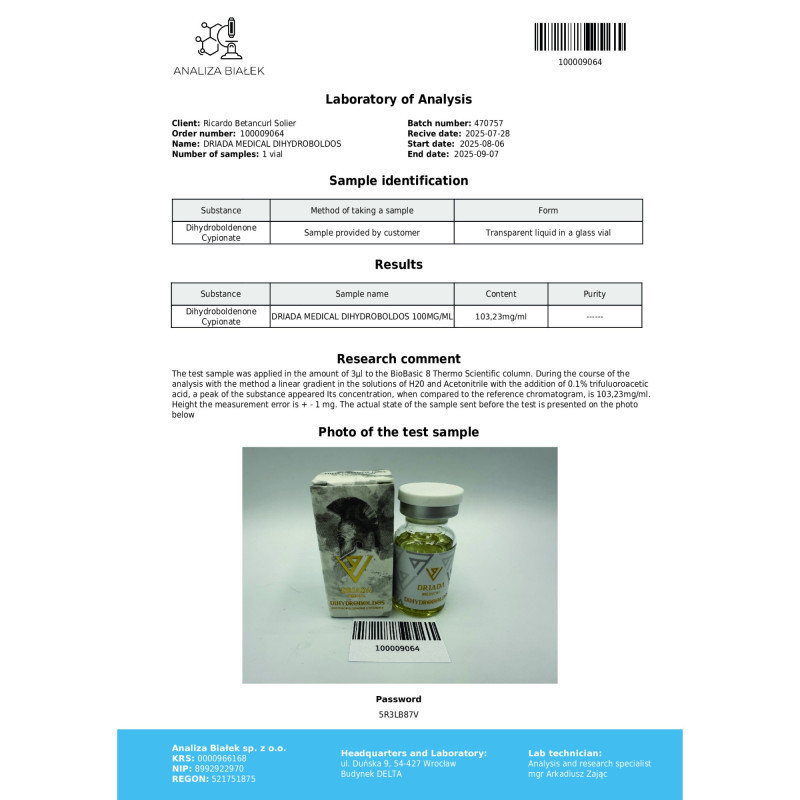


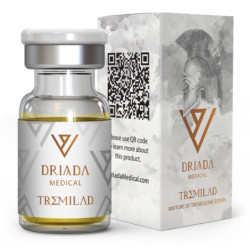
Active substance: Dihydroboldenone Cypionate
Type: Anabolic steroid (DHT derivative)
Form: Injections
Carrier oil: Grape seed oil
 Security policy
(edit with the Customer Reassurance module)
 Delivery policy
(edit with the Customer Reassurance module)
 Return policy
(edit with the Customer Reassurance module)

Dihydroboldenone Cypionate (DHB), also known as 1-Testosterone Cypionate, is a synthetic anabolic steroid derived from testosterone. From the chemical point of view, the ingredient is a 5-alpha reduced derivative of boldenone and a close relative of Dihydrotestosterone (DHT). Note that the ingredient is retailed as an ester. The compound includes a cypionate ester, which extends its half-life and allows for less frequent injections compared to other anabolic steroids.
DHB Dihydroboldenone Cypionate was initially synthesized to explore more tissue-selective anabolic agents than testosterone. The main task was to find a medication with high anabolic properties and reduced androgenic effects. Although the ingredient was explored a long time ago, it hasn’t observed a warm welcome and has never been approved for pharmaceutical use. Popularity has recently come to the drug due to the attention of the bodybuilding community. Still, many users are unfamiliar with the drug’s beneficial properties and potential benefits. Although it’s rather new for consumption, sports enthusiasts have already experimented with DHB administration. They found the component to be exceptionally effective for muscle mass gain and strength enhancement. They report that the regular intake of the drug causes rapid muscle gains without severe side effects commonly associated with other steroids.
DHB stands out for its potent anabolic properties. They are reported to be much stronger than the properties of testosterone. In particular, DHB has an anabolic to androgenic ratio of 200:100 compared to testosterone’s 100:100. It means that the drug causes twice higher muscle growth, which leads to quick muscle gain and strength enhancement. However, unlike testosterone, the ingredient does not convert to estrogen, which means that it has a low risk of causing such side effects as liquid retention or gynecomastia. Besides, the ingredient demonstrates higher stability in the bloodstream due to cypionate ester, ensuring consistent anabolic effects over extended periods. These peculiarities make the drug a preferable solution for sports enthusiasts and bodybuilders who aim at muscle growth.
The medication is characterized by a wide list of features that make it highly demanded and popular in the world of bodybuilding and athletics:
 On the graph, you can see how BMI, AMC (arm muscle circumference), and thigh circumference in the anabolic steroid group changed. Compared to the control group, significant changes are observed, which proves the effectiveness of anabolic steroids in enhancing muscle mass and overall body size.
On the graphs, you can see the results of the two groups. While the control group didn’t show significant results, testees who consumed the drug increased lean muscle mass (Graph A). To guarantee the purity of the experiment, participants of both groups had equal fat mass percentages (Graph B). This finding proves that anabolic steroids enhance muscle growth without increasing fat mass.
Dihydroboldenone Cypionate (DHB) activates a chain of biochemical processes that target androgen receptors and various metabolic pathways. In this section, we’re going to discuss how the component acts on different body systems. Effects are divided into subcategories to ensure a comprehensive understanding of its mechanisms.
Binding to androgen receptors. Like any other anabolic steroid, DHB affects body systems by binding to androgen receptors (AR) in muscle tissue. These receptors are part of a group of nuclear hormone receptors. By binding to androgen, these receptors are translocated to the cell nucleus and influence gene expression.

You can see a normal function of the androgen receptor in the picture. Testosterone (T) enters the cell. If 5-alpha-reductase is present, it is converted into Dihydrotesterone (DHT). When the process of binding steroids occurs, the androgen receptor (AR) undergoes changes, causing the release of heat shock proteins (HSPs). The phosphorylation (P) process occurs before and/or after steroid binding. Further, AR is relocated to the nucleus, where a series of processes occurs. These include 1-Test Cyp DHB binding, dimerization, and the attraction of coactivators. Target genes are transcribed (mRNA) and translated into proteins.
Transactivation and gene expression. Upon binding, the DHB-AR complex experiences a change in the shape of a macromolecule, which allows it to interact with specific DNA sequences called androgen response elements (AREs). This interaction imitates the transcription of target genes involved in muscle growth and repair. It leads to increased protein synthesis and muscle hypertrophy.
Selective androgen receptor modulation. High anabolic activity with moderate androgenic effects is one of the main features of the ingredient. This selective property means that while the component has a high effect on muscle growth, it causes a relatively low impact on secondary androgenic characteristics. For instance, if compared to other steroids, like testosterone.
Stimulation of protein synthesis. Testosterone DHB can affect protein synthesis by stimulating its production in muscle tissues. The component can improve transcription and translation processes. This ability allows the ingredient to promote protein synthesis at a higher pace, which results in faster muscle growth and recovery.
Enhanced nitrogen retention. The ability of muscles to grow greatly depends on nitrogen balance. DHB is characterized by improved retention features, which allow for stimulating anabolic processes. A durable presence of nitrogen in muscle tissue improves and speeds up muscle growth and repair. This feature makes the drug highly effective for both bulking and cutting cycles.
No conversion to estrogen. The principal difference of DHB from other anabolic steroids is its resistance to aromatization. Aromatization is a process during which testosterone is converted to estrogen under the action of the aromatase enzyme. DHB resists this process successfully, meaning that consumers encounter estrogen-related side effects rarely.
Impact on estrogenic activity. Since the drug does not convert to estrogen, consumers enjoy a dry lean physique. This peculiarity makes the drug popular among bodybuilders, especially during cutting cycles.
Muscle hypertrophy. The drug is primarily targeted at increasing muscle size. This effect is achieved due to improved protein synthesis and nitrogen retention. This feature leads to a dry and dense physique with minimum liquid.
Fat metabolism. DHB also contributes to fat loss by affecting metabolic rate. The drug accelerates metabolic speed, which helps oxidate fat stores. As a result, users can support a lean physique easily. This dual action makes the medication an effective treatment for body recomposition.
Cardiovascular impact. Although the medication is primarily targeted at muscle gains and strength enhancement, it also has a passive impact on cardiovascular health. The ingredient can influence the level of cholesterol by decreasing HDL (good cholesterol) and increasing LDL (bad cholesterol). This effect increases the potential risk of cardiovascular conditions. Thus, consumers should monitor their health parameters regularly.
Liver toxicity. Although the medication is usually injected, it can still affect the liver. Numerous studies proved that the drug can increase liver weight and enzyme levels, which indicates potential liver stress. This is why consumers should be cautious and monitor liver function regularly to minimize these risks.
The component is mainly used in the bodybuilding community and athletics. Its applications can be categorized into several key areas:
100–400 mg per week is a typical dosage range.
It’s recommended to divide a weekly dosage into one or two shots. Splitting the dosage into two injections can help maintain more stable blood indicators and potentially reduce side effects.
Injection method. 1-Testosterone Cypionate DHB 100 mg/ml is administered via an intramuscular injection. Note that it can crystallize at lower temperatures due to its high concentration. Thus, the appearance of crystals does not mean drug spoilage. Warming the vial in hot water before injection allows for dissolving crystals and ensuring a smoother injection process.
A typical cycle lasts for 12–14 weeks. Its precise duration can vary, depending on the user’s experience level, goals, and tolerance.
DHB is often stacked with other anabolic steroids like Testosterone. This strategy allows for enhancing its anabolic effects and providing a more balanced hormonal environment.
Make sure to monitor health parameters during the entire cycle of drug intake. Regular testing should be done every 4–6 weeks during the cycle to monitor the impact of DHB on your body. Key Test Cyp DHB procedures include:
Elevated liver enzymes. If liver function tests show an elevated level of enzymes, consider lowering the dosage or discontinuing use to prevent liver damage.
The level of cholesterol. If lipid profiles indicate adverse changes in cholesterol levels (e.g., increased LDL or decreased HDL), adjust the dosage or incorporate dietary and supplemental interventions to manage cholesterol.
Hormonal imbalances. Adjustments in DHB 1-Testosterone Cypionate dosage may be necessary if hormone panel results show significant suppression of natural testosterone or elevated estrogen levels.
Hormone recovery. When a DHB cycle is completed, it is crucial to undergo PCT to help restore natural hormone production. Common PCT protocols include the use of SERMs (Selective Estrogen Receptor Modulators) for 4–6 weeks.
1-Testosterone does not convert to DHT.
It’s a powerful enhancer for muscle gain. Thus, it’s primarily used in bodybuilding to ensure quick muscle growth while preserving a dry lean physique.
The drug is also named 1-Testosterone Cypionate.
Active substance: Dihydroboldenone Cypionate
Type: Anabolic steroid (DHT derivative)
Form: Injections
Carrier oil: Grape seed oil