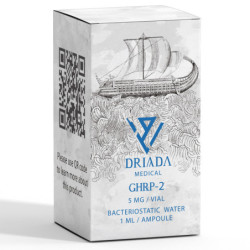
Package:5mg/vial+water
 Security policy
(edit with the Customer Reassurance module)
 Delivery policy
(edit with the Customer Reassurance module)
 Return policy
(edit with the Customer Reassurance module)
GHRP-6– peptide, growth hormone secretion stimulant. These substances have been developed to treat growth hormone deficiency. GHRP-6 is very similar to GHRP-2, the main difference is that the second is about 1.5 more powerful GH booster, but it also increases the concentration of prolactin and cortisol. These peptides can be used in combination to achieve a synergistic effect. The maximum concentration of growth hormone in the blood was observed with the joint administration of GHRP-6 and GHRP-2. The entire line of GHRP peptides has a significant effect on appetite, however, according to athletes' reviews, GHRP-6 has a slightly greater effect on appetite. This effect weakens already at the 2nd week of the cycle. GHRP-6 can be injected into the body in various ways: subcutaneously, orally, under the tongue, but most often intramuscularly. The molecules of this substance are so small that they can get into the vessels of the mouth and stomach before being destroyed by digestive enzymes. However, only injectable routes of administration provide optimal bioavailability.
The abbreaviation GHRP stands for Growth Hormone Releasing Peptide, the peptide that stimulates the secretion of growth hormone. All drugs in this group are ghrelin receptor agonists. Their activation lies in the fact that they attach ghrelin receptors and activate them (Ghrelin is a peptide hormone that the properties of gonadoliberin and other metabolic and endocrine functions). As a result, the secretion of its own somatotropic hormone by the pituitary gland is stimulated. This methos of releasing growth hormone has its advantages and disadvantages, which we will describe below.
In medicine, these drugs were originally studied to replace expensive growth hormone treatment in children and adults with insufficient secretion of self-tropin. Later it turned out that this class of drugs has significantly greater therapeutic potential. GHRP drugs are most often used for the same purposes as growth hormone and can be chosen as a more cos-effective alternative. This can be an increase in muscle mass, cosmetic improvement of the skin, strengthening of a healing after injuries.
All GHRP are mimetics of ghrelin, a hormone produced by stomach cells in response to fasting. Ghrelin and ghrelin mimetics act by activating the ghrelin receptor (GHS-R1a). Elevated ghrelin levels increase growth hormone levels by stimulating ghrelin receptors in the pituitary gland. GHRP stimulates the release of growth hormone in the same way that fasting-induced ghrelin increases.
Studies have shown that stimulation of growth hormone secretion by GHRP drugs have many positive anabolic effects associated with increased plasma levels of growth hormone. The increase in growth hormone levels is followed by increased secretion of the IGF-1 protein, which also has many other beneficial properties, such as strengthening tendons by increasing collagen synthesis, as well as neuroprotective properties and a positive effect on immune system.
Growth hormone plays a key role in regulating body composition. An important property of GH is its powerful lipolytic effect. The administration of growth hormone to people with its deficiency reduces body fat mass and significantly increases lean body mass. A recent meta-analysis concluded that growth hormone supplementation in healthy athletes increased body mass by an average pf 1.8 kg.
Growth hormone enhances lipolysis directly by reducing the action of a number of lipogenic enzymes and indirectly increasing the production of other lipolytic hormones such as catecholamines glucagon, as well by increasing the expression of adipocyte adrenoreceptors. In general, these effects lead to an increase in the utilization of body fat. But it is impossible to reliably say that GHRP group drugs affect adipose tissue in exactly the same way, because, as experiments have shown, these peptides can have effects independent of this increasing the amount of fat in the body.
Growth hormone plays an important role as an anabolic agent in human skeletal muscle and tendon connective tissue, which provide a matrix for the transmission of force from individual muscle fibers to bone. Thus, reinforced connective tissue will give a stronger and more resistant muscle and tendon structure. It is for this reason that growth hormone is used by athletes to treat muscle and tendon injuries. Similarly, high levels of growth hormone improves bone strength both directly and indirectly by increasing intestinal calcium absorption and serum vitamin D concentrations.
On the most highly regarded effects of growth hormone is its effects on muscle anabolism. A decrease in muscle mass and protein synthesis is observed with a decrease in the production of growth hormone and IGF-1. Growth hormone induces uptake of glucose and amino acids and stimulates protein synthesis, possibly using energy derived from its lipolytic activity. The effect of growth hormone on protein in mediated both indirectly through IGF-1 and directly.
In addition to boosting growth hormone and IGF-1 levels, the GHRP family has been shown to have many other beneficial properties in numerous animal studies that remain to be further explored in the future. All of the additional properties of GHRP are exerted in a growth hormone -independent manner and are related to the ability to attach to two different receptors (GHS-R1a and CD36) that appear to mediate their cytoprotective, cardioprotective and other pharmacological properties.
Experiments on animal models have shown that GHRP improves cardiac performance in various ways and creates favorable factors, such as: increase in injection fraction, decrease in blood pressure, improvement of all dysfunctional disorders of the ventricles of the heart (including their reduction with pathological increase), reduction of cardiac fibrosis. Cardioprotective properties of GHRP are able to prevent the death of cardiomyocytes (heart cells) and cause the restoration of critical functions of the heart during episodes of ischemia. These properties make GHRP a new generation of potentially promising cardioprotective agents.
The GHRP group has not only cardiprotective but also cytoprotective (protection of cells from damage by various influences) properties for many different cells of the body. The results of the studies reviewed are consistent with abroad cytoprotective effect on various organs by reducing inflammation and preventing necrosis (cells damage that leads to their premature death) and apoptosis (the process of self-destrucyion of cells according to a genetically given program in response to a specific external or internal stumuli). One of such cetoprotective properties was found in experiments is hepatoprotective properties. Also, these peptide drugs prevent damage to the gastric mucosa caused by any form of stress.
In addition, this group of peptides has an anti-inflammatory effect, which was shown by experiments on rabbits with arthritis, in which inflammation is diseased joints was significantly reduced when the substance was administrated.
GHRP’s hold great promise as a potential drug in the future, with a very wide range of therapeutic effects on various body functions and tissues. In a large number of test, no serious side effects have been found from their use, both in animals and in humans. In modern sports practice, athletes most often use this group of peptides to increase growth hormone in the blood or increase appetite when gaining muscle mass, but the experimental results shown opens up new possibilities for this class of drugs, which in the future may also become popular among athletes. At the moment, the drug of the GHRP group requires further research, including in humans, to confirm the consistency of these properties in medical practice.
It also bears the name somatotropinreleasing hexapeptide, was created in 1980 (according to other sources -in 1976) and is one of the first drugs in this area. In terms of efficiency, it ranks only third among the funds listed here. Increases cortisol and prolactin in the blood, but the level of these hormones will not be too high if the dosages used are about 100 micrograms per injection. GHRP-6 also increase appetite.
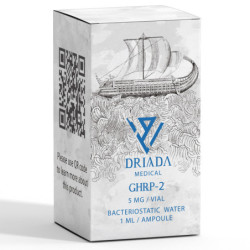
It was created by modifying the GHRP-6 molecule -the result was a drug that is significantly superior to its “parent” in power. Increases the level of cortisol and prolactin in the blood, as well as increases appetite after injection, which was shown during the experiment. Appetite increased so much that the subjects ate 35.9 +/- 10.9% more when administrated GHRP-2 compared to placebo, and each increased their intake even per kg of body weight (32.5 kcal /kg vs 24.2 kcal /kg). This effect will be useful for athletes during the period of mass gain, but of course it will interfere if your goal is to remove excess fat.
Hexarelin (aka Examorelin) is the most powerful secretion stimulant somatotropic hormone belonging to the GHRP group and probably the most powerful peptide stimulator of one’s own hormone in general. At all dosage levels, it has the strongest effect on cortisol and prolactin levels, raising these hormone levels to the upper limits of normal.
Ipamorelin is the first GHRP receptor agonist with a growth hormone release selectivity similar to that of GHRH. The drug is generally devoid of any side effects that are characteristic of the GHRP group – its usage, even in high dosages, does not lead to an increase in the levels of cortisol and prolactin in the blood plasma. It also does not cause a sharp feeling of hunger, unlike other representatives of this group of peptides. In terms of its effect on the level of growth hormone in the blood, Ipamorelin is comparable to GHRP-6.
Package:5mg/vial+water