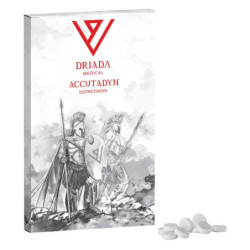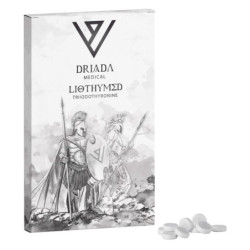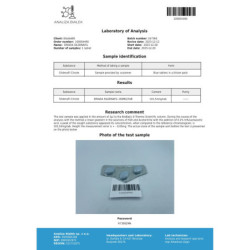


Package:10mg/tab/50tabs
 Security policy
(edit with the Customer Reassurance module)
 Delivery policy
(edit with the Customer Reassurance module)
 Return policy
(edit with the Customer Reassurance module)
RAD140 is a new substance that is still being studied in pharmaceutical trials. RAD140 was developed by Radius Pharmaceuticals in the late 2000s as a potential therapeutic agent to prevent muscle wasting in terminally ill patients. It is currently being investigated as a therapeutic agent for breast cancer patients. RAD140 has excellent pharmacokinetic properties and is powerful anabolic. It has similar anabolic effects to LGD4033 and also appears to be a partial agonist in prostate tissue. That is, it can protect the prostate from enlargement when exposed to testosterone or any of its derivatives. Like, S4, it looks like it could be a great addition to any steroid complex to protect against prostate hyperplasia. In addition, RAD140 lowers lipid levels (LDL, HDL, Tryglicerides) without increasing liver enzymes.
RAD140 is an investigational selective androgen receptor modulator developed by Radius Health Inc for use in androgen replacement therapy. It was licensed by Ellipses Pharmaceuticals in 2020. Some of the potential benefits being investigated are for conditions such as muscle wasting and bone loss. Studies in rats have shown that RAD140 as a drug appears to be safer as a replacement therapy than testosterone. RAD140 also increased lean muscle mass in primates by acting on androgen receptors in skeletal tissue. The first human study was initiated in October 2017 and completed in September 2020 in postmenopausal women with breast cancer.
Prostate protection. A feature and positive property of RAD140, like S4 is that it is a partial agonist of androgen receptors in prostate cells. So it binds to them without activating them, but blocking them from attaching DHT. Thus, there is no stimulation of prostate growth. In a sense, RAD140 protects the prostate from the androgenic effects of DHT when used in combination with DHT anabolic steroids. RAD140 is a potent androgen receptor agonist in breast cancer cells with a clear mechanism of action, including repression of the ESR1 gene.
Bro-science tells us that RAD140 is non-toxic to the liver. Anecdotal evidence and blood tests bone by bodybuilders also support this notion. We can conclude that in the majority of the population, RAD140 will not cause liver damage, but still to be absolutely sure- get a blood test before and after your cycle for liver enzymes ALT and AST. There is only one evidence of liver disease in a man who used RAD140 during a clinical trial, which has not yet been clearly explained.
Although to a lesser extent than anabolic steroids, Aall SARMs can affect cholesterol levels to some extent. Most often, they decrease HDL (good cholesterol) levels and increase LDL (bad cholesterol). During your RAD140 cycle, you will need to take these blood tests to keep your cholesterol levels under control.
RAD140 testosterone suppression usually occurs between the sixth and seventh week of your cycle, but only if your doses are in the 10 mg range. This may happen sooner if you are taking dosages such as 20 or 30 mg per day. To avoid this- do not take more than 10 mg per day during your RAD140 cycle.
Package:10mg/tab/50tabs